NIST SP 800-207Verify AlwaysLeast Privilege
Build for Zero Trust
Architecture and implementation aligned to Zero Trust principles — verified identity, minimal privilege, continuous authentication, and no implicit trust.
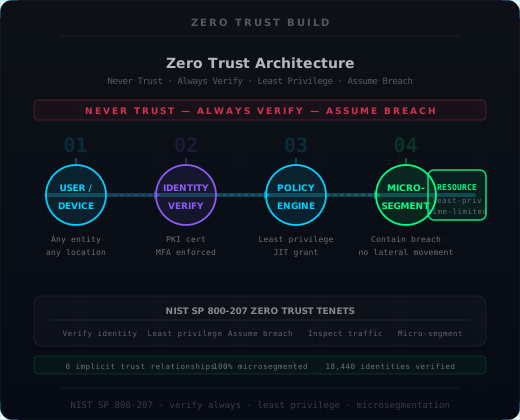
Architecture and implementation aligned to Zero Trust principles — verified identity, minimal privilege, continuous authentication, and no implicit trust.
Every access request — regardless of source — is authenticated, authorised, and continuously validated. No implicit trust based on network location.
PKI-backed identity for all entities — human users, service accounts, and non-person entities — as the foundation of every access decision.
Granular, just-in-time access grants with automatic expiry. Users and services access only what they need, for as long as they need it.
Network and workload microsegmentation limits lateral movement. Breaches are contained, not free to traverse the environment.
Real-time visibility into all access events, session behaviour, and access policy outcomes — feeding continuous risk assessment.
Access policies expressed as code, enforced at every control point, and continuously tested against your security baseline.
We assess your current architecture against the NIST Zero Trust maturity model and identify the highest-value improvement areas.
A Zero Trust reference architecture is produced, tailored to your environment, data sensitivity, and operational requirements.
Identity, access, segmentation, and monitoring capabilities are implemented in logical phases with validation at each stage.
Post-implementation, continuous monitoring and automated policy testing maintain the Zero Trust posture over time.
Tangible, documented deliverables produced through every engagement.